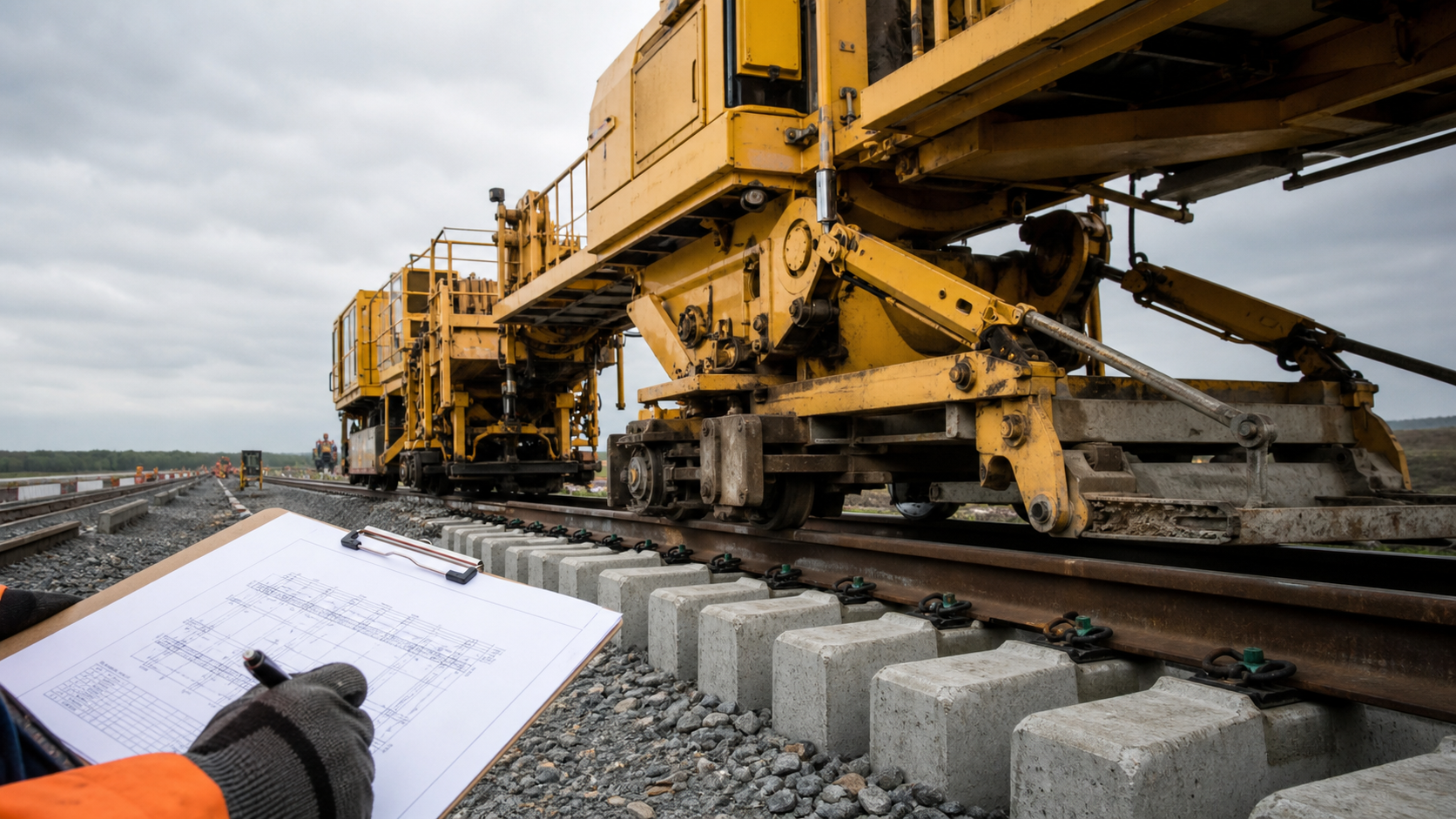
Buyer Decision Problem
The buyer was looking at a highly specialized machine where the sales brochure contained many technical parameters, but those parameters needed to be translated into procurement risk. A spec sheet can show claimed capacity, component structure, and operating limits, but it does not answer whether the machine fits the buyer's project conditions, support expectations, maintenance capability, or safety requirements.
The immediate task was to convert the brochure into fieldwork questions that can be used before an on-site technical visit or supplier meeting.
What We Checked
- Reviewed the equipment brochure for system components, operating environment, performance parameters, and technical features.
- Converted dense technical specifications into fieldwork verification prompts for machine composition, sleeper handling, rail positioning, hydraulic systems, electrical control, and maintenance diagnostics.
- Identified which claims relate to project fit: rail length, sleeper handling speed, gradient limits, curve radius, traction capacity, operating environment, and transport configuration.
- Flagged after-sales and maintenance questions that are not resolved by the brochure alone.
Fieldwork Questions
- Which operating conditions in the buyer's project match the machine's stated temperature, humidity, altitude, curve-radius, wind, and gradient limits?
- Can the supplier demonstrate the full equipment set, including rail traction, sleeper transfer, gantry movement, hydraulic systems, electrical control, and braking interfaces?
- What evidence supports claimed laying efficiency, spacing tolerance, centerline deviation, and continuous working performance?
- How are faults diagnosed, recorded, and repaired in the field, and what spare parts are normally stocked?
- What transport, assembly, commissioning, operator training, and site-safety requirements should be confirmed before any purchase discussion?