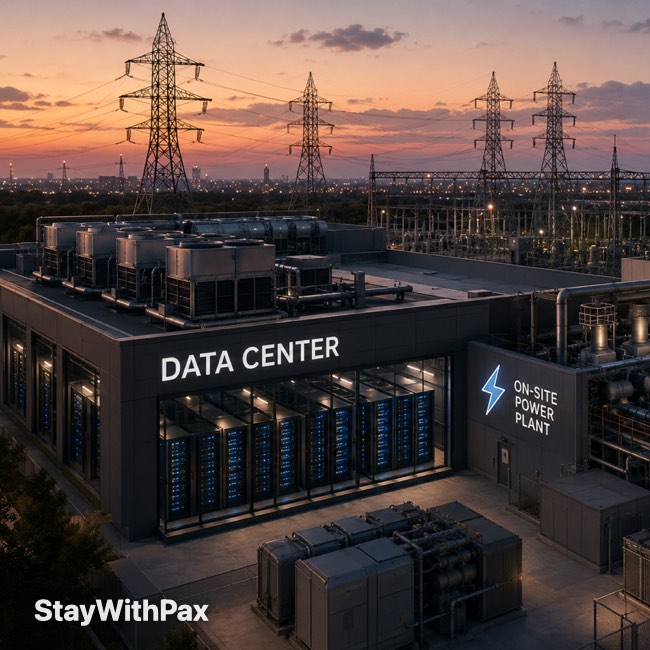
A recent power-sector story from Texas is worth watching.
San Antonio's municipal utility CPS Energy introduced a pilot program for large power users, including data centers, encouraging them to provide self-generation capacity. CPS Energy may also support fuel supply such as natural gas for that generation.
The signal is important. Data centers used to look like internet infrastructure. Now they increasingly resemble steel mills or chemical plants: large power users that must think about generation, fuel, grid connection, and reliability.
AI Looks Light, but Its Base Is Heavy
AI products feel digital. The user sees a model, an API, a chatbot, or an application. Underneath are servers, data centers, cooling systems, transformers, substations, land, water, and electricity.
The more AI moves from demos to real workloads, the heavier the infrastructure becomes.
Data Centers Are No Longer Ordinary Customers
A normal electricity customer signs up for service and pays bills. A large AI data center may require new generation, grid upgrades, substations, backup capacity, and long-term power contracts.
Utilities cannot treat every project as a simple load addition. They must ask whether the grid can support it, who pays for upgrades, and whether the load creates risk for other customers.
Power Moves From Cost Item to Capacity Item
For AI companies, electricity is no longer just an expense line. It is a production input.
Without power, servers cannot be used. Without grid connection, construction does not become computing capacity. Without predictable supply, customers cannot rely on the service.
That means power access is becoming part of the entry ticket for AI infrastructure.
New Industries Return to the Old World
Every new industry eventually lands in old constraints: land, energy, materials, finance, permits, and labor.
AI is no exception. The more it grows, the more it depends on old industrial systems.
Practical Takeaway
When evaluating AI infrastructure or industrial suppliers, ask where the power comes from and how reliable it is. The next bottleneck may not be model demand. It may be connection, generation, and the ability to run continuously.