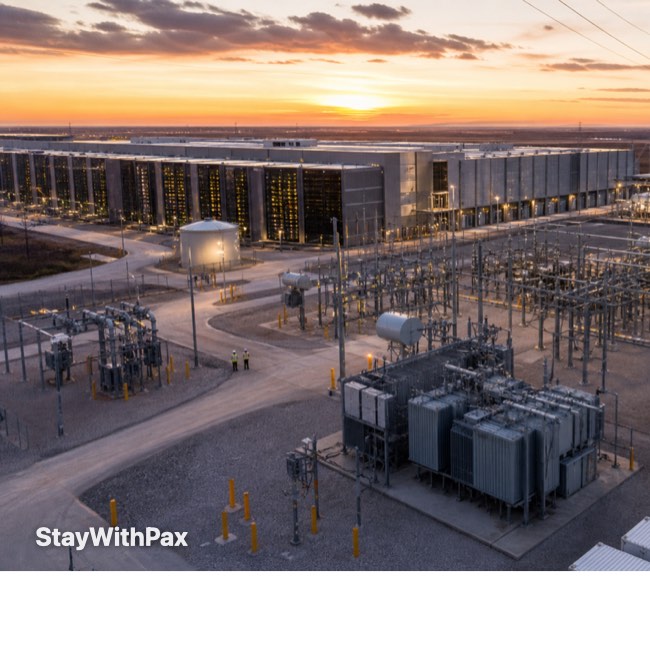
AI data centers are changing from technology-company projects into power-system issues.
In Texas, ERCOT has required large data centers and crypto mining facilities above certain capacity thresholds to provide information about voltage ride-through capability and dynamic models. Later rule proposals continued in the same direction: large loads need better model quality, testing, and verification.
The direction is clear. AI data centers are not ordinary commercial buildings. They are large loads that grid operators need to understand and manage.
Why Voltage Ride-Through Matters
Voltage ride-through is about how equipment behaves during grid disturbances. If a large load disconnects or changes behavior suddenly during a voltage event, it can worsen system instability.
For a small customer, this is not a major grid issue. For a 75 MW or larger data-center load, it matters.
AI Brings More Than More Electricity Use
The problem is not only consumption volume. It is concentration, timing, sensitivity, and behavior.
AI facilities may cluster in specific regions. They may require high reliability. They may interact with backup systems, power electronics, cooling loads, and fast-changing compute tasks.
This makes them harder to manage than a simple steady load.
Data Centers Are Harder to Curtail Than Crypto Mining
Crypto mining can often reduce load when prices rise or the grid is stressed. AI data centers may serve enterprise customers, cloud workloads, and latency-sensitive services. Curtailment is not always simple.
That makes grid planning more demanding.
Transformers Become a Key Bottleneck
Power infrastructure has many slow-moving components. Transformers, substations, switchgear, cables, grid studies, and permits can take longer than building server halls.
This is why investment is moving toward grid equipment and power infrastructure. The AI boom needs much more than GPUs.
China Has Capacity, but Also Market-Access Work
Chinese manufacturers have strong capacity in transformers, power electronics, cables, cooling, and related equipment. But exporting into grid infrastructure is not only about capacity.
Buyers will ask for certification, reliability records, documentation, local service, grid compliance, and risk responsibility.
Practical Takeaway
AI infrastructure is also grid infrastructure. Watch the physical equipment and compliance systems behind data centers. The companies that can help large computing loads connect safely and reliably may become more important than the market currently assumes.