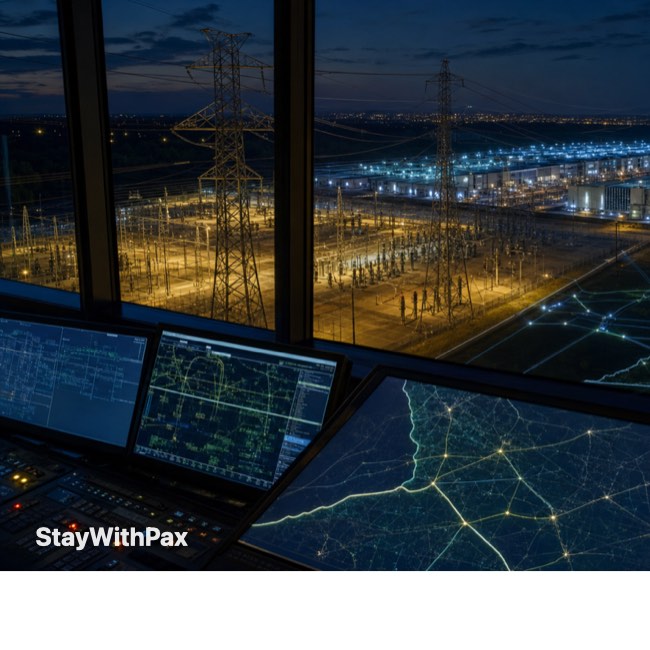
A major power-company merger may look like traditional utility news. In the AI era, it also belongs to the infrastructure story.
When data centers arrive at large scale, utilities face a difficult mismatch: server capacity can be built faster than generation, transmission, and substations.
AI Growth Means Electricity Growth
The faster AI grows, the more electricity it needs. Training, inference, cooling, networking, and backup systems all consume power.
This demand is not evenly distributed. Data centers often cluster near fiber, land, tax incentives, cloud regions, or existing grid capacity. That concentration creates local pressure.
Customers Are Queuing for Capacity
Large technology customers may request huge power connections years in advance. For a utility, this creates both opportunity and risk.
Serving data centers can increase revenue. But if grid upgrades are expensive, slow, or controversial, utilities must decide who pays and how to protect other customers from cost increases.
Why Utility Scale Matters
A larger utility with more generation assets, stronger balance sheet, and broader grid planning capability may be better positioned to serve large data-center demand.
Scale can help with financing, procurement, regulatory negotiation, and long-term infrastructure planning.
This is why power assets are becoming strategic again. The AI economy is pulling old infrastructure back into the center.
Data Centers Move Faster Than Grids
A data-center campus may be planned and built within a few years. A transmission line or major substation upgrade may take much longer because of permitting, land, equipment lead times, and regulatory review.
This timing mismatch is one of the most important constraints in AI infrastructure.
Practical Takeaway
Do not evaluate AI only through models or chips. Look at utilities, grid equipment, power contracts, and who can finance infrastructure expansion. In many regions, the real AI bottleneck will be the grid.