Buyer Decision Problem
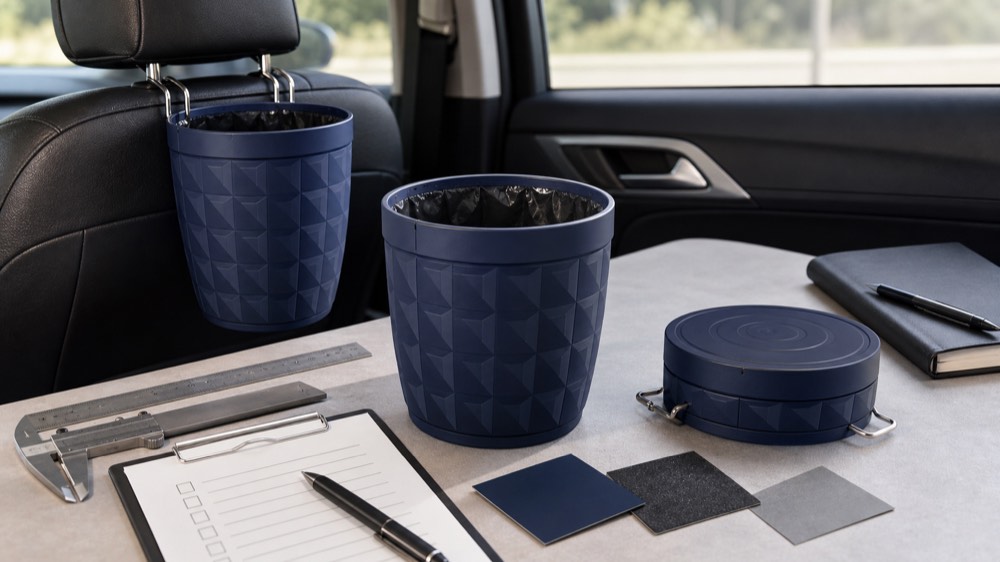
The buyer was looking at a compact car accessory positioned as a foldable in-vehicle trash bin. The supplier material emphasized flexible mounting, space-saving storage, waterproof lining, and an exterior texture design. For this category, buyer risk is less about one headline feature and more about whether the product works in real car interiors across different vehicle models, survives daily use, and can be sold without branding or documentation problems.
The review turned the product style page into a practical follow-up checklist before sample ordering or supplier qualification.
What We Checked
- Reviewed product positioning, use cases, mounting modes, folded and unfolded dimensions, material claims, color and finish choices, and visible accessory parts.
- Converted catalog claims such as foldability, waterproof lining, easy cleaning, and multi-position hanging into sample-level test items.
- Flagged buyer-relevant risks around hook strength, interior fit, anti-spill behavior, liner durability, odor, cleanability, packaging, and unit consistency.
- Treated third-party vehicle-brand or logo exposure in the source material as a clearance risk to remove or verify before using any public-facing sales assets.
Fieldwork Questions
- Does the bin fit the buyer's target vehicle interiors when used on the headrest, door, and floor, and is the mounting hardware stable during driving?
- Are the folded and unfolded dimensions, inner volume, plastic thickness, liner material, and weight consistent across samples?
- Does the waterproof liner resist leakage, odor, staining, and repeated cleaning under realistic waste and drink-spill conditions?
- Can the supplier provide unbranded product photos, packaging files, material declarations, and test evidence for the exact SKU?
- What QC checks should be added for hooks, rim deformation, surface texture defects, lid fit, liner bonding, and carton protection?